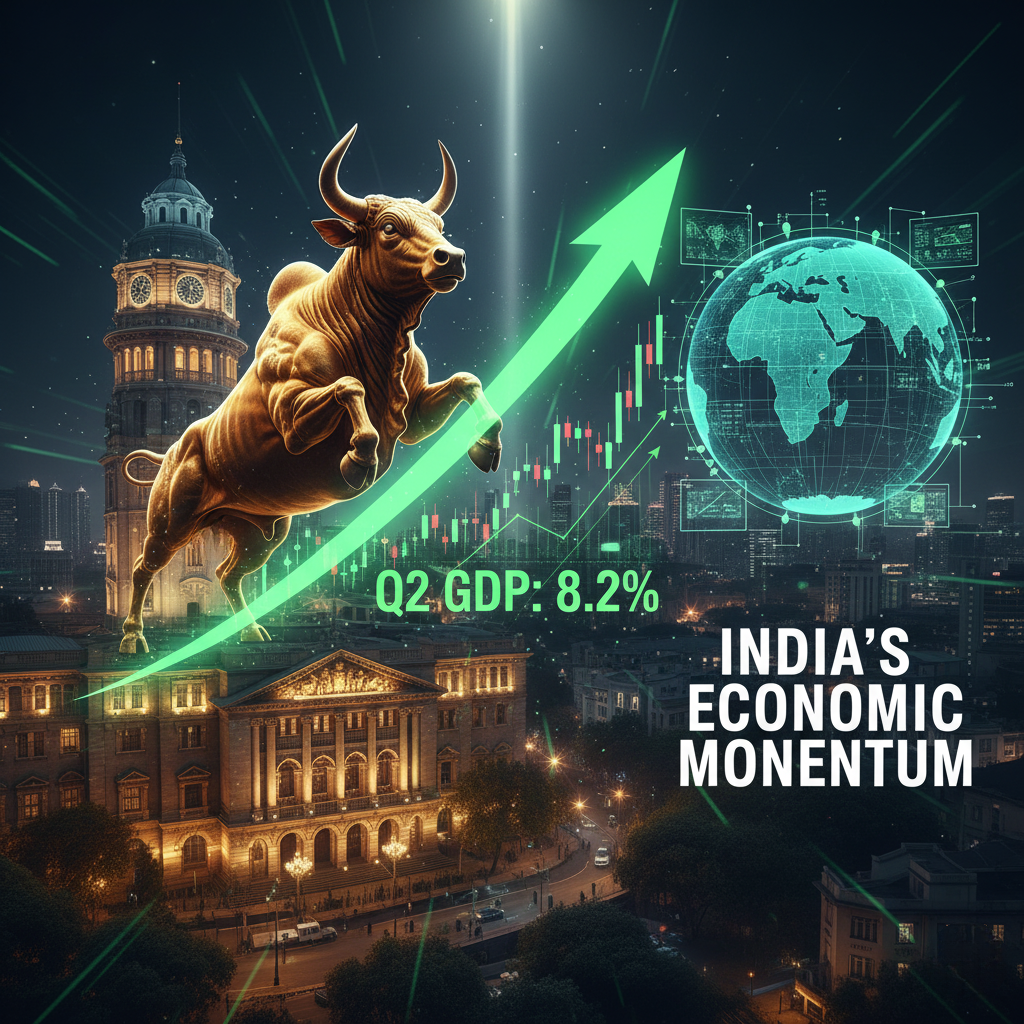
India is the fifth-largest economy in the world, and it is at the threshold of its saga. India has transformed as a world power since the last three decades since it was an agrarian nation, then services, manufacturing and technology. It has a population of more than 1.4 billion and a median age of 28 together with one of the fastest growing GDPs in the big economy environment. India is beginning to take center stage as one of the most significant actors in the development of the 21st century international order.
Nevertheless, to continue this narrative of expansion, there is the need to manage structural issues, that is, in terms of jobs and infrastructure but also in terms of international geopolitical crises and climate change issues.
Here are the key drivers fueling the country’s rise, and the challenges that must be addressed to sustain long-term, inclusive development:
1. Liberalization to GlobalizationIndia’s development process began in 1991 when pioneering liberalization reforms were implemented for the first time. The reforms ended “License Raj,” opened up the economy to international capital, and brought in deregulation and privatization.Then Indian GDP increased from USD 266 billion in 1991 to over USD 4.1 trillion in 2025 (on IMF basis) and now the fifth largest economy of the world ranking just after US, China, Japan, and Germany.2. Growth in 2000s2000s decade was spearheaded by India as the outsourcing and IT centers. IT growth and GDP positioned India on the competitive map of the world and digitally at the vanguard.Indian service industries now contribute more than 50% to GDP, manufacturing approximately 17%, and agriculture still controlled by more than 40% of the people—growth and measurement of structural disequilibrium.II. Strongest Drivers of India’s Growth Story
1. Demographic Dividend
India’s largest strength is youth and the next generation. With more than 65% of Indians being under the age of 35 years, India possesses a gigantic and dynamic store of workforces who can contribute to accelerating economic growth for the next two decades.
Working-age population 15–64 would be around 1 billion in 2040.
But dividend is a blessing, else supplemented by quality job creation and capacity building—job turning point driver of growth.
2. Infrastructure and Digital Transformation
Development of infrastructure has been on Indian government agenda as priority ingredient of its economic roadmap.
Gati Shakti Plan and National Infrastructure Pipeline (NIP) are enabling the multi-modal connectivity at highway, rail, port, and airport.
Sagarmala and Bharatmala plans are re-modeling the road and port infrastructure, and the PM Gati Shakti is introducing the integration of logistics planning.
The digital space also got transformed in the Digital India, Aadhaar, UPI (Unified Payments Interface), and India Stack saga that changed financial inclusion and governance.
UPI by itself has facilitated more than ₹20 trillion of end-month transactions (2025), and the world’s digital payments center is India.
All that investment in digital and physical infrastructure is lowering transaction cost, ease of doing business, and attracting domestic and foreign investment.
3. Policy Reforms and Government Initiatives
Indian policymaking in recent years has been characterized by a string of paradigm-shifting milestones:
Goods and Services Tax (GST) – underdeveloped level playing field payment market.
Insolvency and Bankruptcy Code (IBC) – brought credit discipline and business renewal.
Production-Linked Incentive (PLI) Schemes – encouraged domestic manufacturing of electronics, pharma, and EVs.
Make in India and Atmanirbhar Bharat – encouraged self-reliance and low-cost manufacturing.
Startup India – developed one of the world’s best startup ecosystems with 100+ unicorns.
These initiatives boosted the country’s image across the world and captured Ease of Doing Business scorecard ranking achievements in India from 142 (2014) to 63 (2020) before the rating was halted.
4. Urbanization and Growth in Consumption
600 million Indian citizens would be living in town and city areas by 2030 and would be building colossus demand for consumer goods, housing, and infrastructure.
Metro growth and increasing incomes have driven the middle class—propelling growth in automobiles, real estate, e-commerce, FMCG, and entertainment.
Indian consumption is about 60% of India’s GDP, one of the largest consumption-led big economies globally.
5. Technology and Innovation Startups
World’s top three startup ecosystem and global innovation are in India.
Bengaluru, Delhi-NCR, and Mumbai are fintech, edtech, healthtech, and e-commerce startups and young unicorns and tech titans hub.
India’s passion for early-stage entrepreneurship is being reaped at many startups in recent years.
And above all, AI, green energy, chip design, and EV manufacturing are building up over next tech leap.
6. Global Alliances and Trade Potential
Geo-shift in India’s geo-political position in Indo-Pacific geopolitics and memberships of global institutions like G20, QUAD, and IPEF have enhanced its economic as well as geopolitical leverage.
China+1 policy initiative as the new agenda, India first choice as second choice for value chains.
FDI inflow has been year by year – more than USD 70 billion annually recently-a testament to world societies’ faith in the ability of India.
III. Future Challenges
Although the India’s growth story till now has been in the right direction, there are some inherent issues which would decide its direction unless rectified at the right time.
1. Mismatch of Job and Skill
Good GDP growth but no generation of employment. There is little hope that the workforce would get employable in the organized sector, and the level of unemployment among the youth is on the rise.
15–18% youth unemployment based on CMIE estimates is a scenario of market demand-and-supply disequilibrium between supply and demand of education.
Is it blaming instrumental education, professional training, and entrepreneurship to bridge the gap a time trend.
2. Regional Disadvantage and Income Inequality
The industries are not de-locating equally. Cities like Mumbai, Bengaluru, and Delhi are contributing the highest percentage to India’s GDP and falling behind in industrial and infrastructure development of north and east states.
Indians in the top 10% income group are controlling over 70% national assets (Oxfam 2024), and that is most likely to result in increasing inequality and social disintegration.
3. Rural Dependence and Agriculture
Agricultural share is below 18% of GDP but agriculture is engaging more than 40% of labour.
Sparsely distributed fields, low productivity and inefficient water usage are sucking the rural economy.
Rise in farm size based on agri-tech model, diversification of crops, and rural infrastructure have to be implemented in the context of healthy economy.
4. Energy and Environmental Sustainability
India’s success in the coming decades would be dependent very much on the speed of India’s transition towards energy.
Third-largest emitting country in the world, India requires de-carbonisation, not at the expense of but at the expense of giving up developing energy needs.
500 GW renewables target by 2030 is policy effort and private sector capital driver.
Solar, wind, green hydrogen from renewals will be India’s climate heritage to the world because of global leadership.
5. Structural and Fiscal Reforms
The highest priority must be accorded to the areas of fiscal prudence, debt management, and state finance reform.
Land and labor reforms, often considered politically sensitive, remain key to improving industrial competitiveness.
6. Global Headwinds and Geopolitics
India will have to deal with international imponderables—the whole range from US-China tensions to supply chain blowout, oil price uncertainty, and monetary tightness in the advanced world.
But its diplomatic maneuverability and long arm through multilateral institutions provides sufficient elbow room to pay for strategic convergence east and west.
IV. Road Ahead: Vision for 2047
India would be completing its hundred years of independence in 2047 and would be a developed country as “Viksit Bharat”.
The change will be on the following conditions:
7% sustained GDP growth, More jobs created, Health and education revolution,
Technological change, Global production sustainable value chains.
India can be a $10 trillion consumption, infrastructure, and innovation-driven economy in the early 2030s if it so does.
Conclusion
India’s grand success story is as much economic—and one of resurrection, renewal, and second chance. Not the arrival of the digital age or liberalization did it, but already India had demonstrated that it could be to greatness.
The second story of growth will involve participatory policy, green ethics, and political activism whereby all people in India will prosper.
Sources:
IMF World Economic Outlook (2025)
World Bank Data – India Overview (2024)
NITI Aayog, Economic Survey of India 2024–25
CMIE Unemployment Data 2025
Oxfam India Inequality Report 2024
Ministry of Finance, Government of India
Reserve Bank of India Annual Report 2025
Disclaimer:
This article is an analytical summary based on publicly available reports and data from international and national institutions, including IMF, World Bank, NITI Aayog, CMIE, Oxfam, RBI, and the Government of India. It is intended for informational and educational purposes only and does not constitute financial, investment, or professional advice. The views expressed are those of the author(s) and do not represent the official positions of any organization or government agency. While every effort has been made to ensure the accuracy of the data presented, the author(s) and publisher accept no responsibility for any errors or omissions, or for any actions taken based on the information contained herein.